

What happened in China this week:
Chinese Makers Built 95% of the World’s Humanoid Robots. Agibot Overtook Unitree.
DeepSeek Wants To Be The Software For Huawei Chips. Beijing Still Lets Nvidia In.
Memory Costs Push China’s Flagship Phones Up RMB1,000. Only Huawei and Apple Are Growing.
Geely and NIO Combine Forces for a Battery Swap Network
Dongshan Precision Is Coming to Hong Kong IPO
#1 Chinese Makers Built 95% of the World’s Humanoid Robots. Agibot Overtook Unitree.
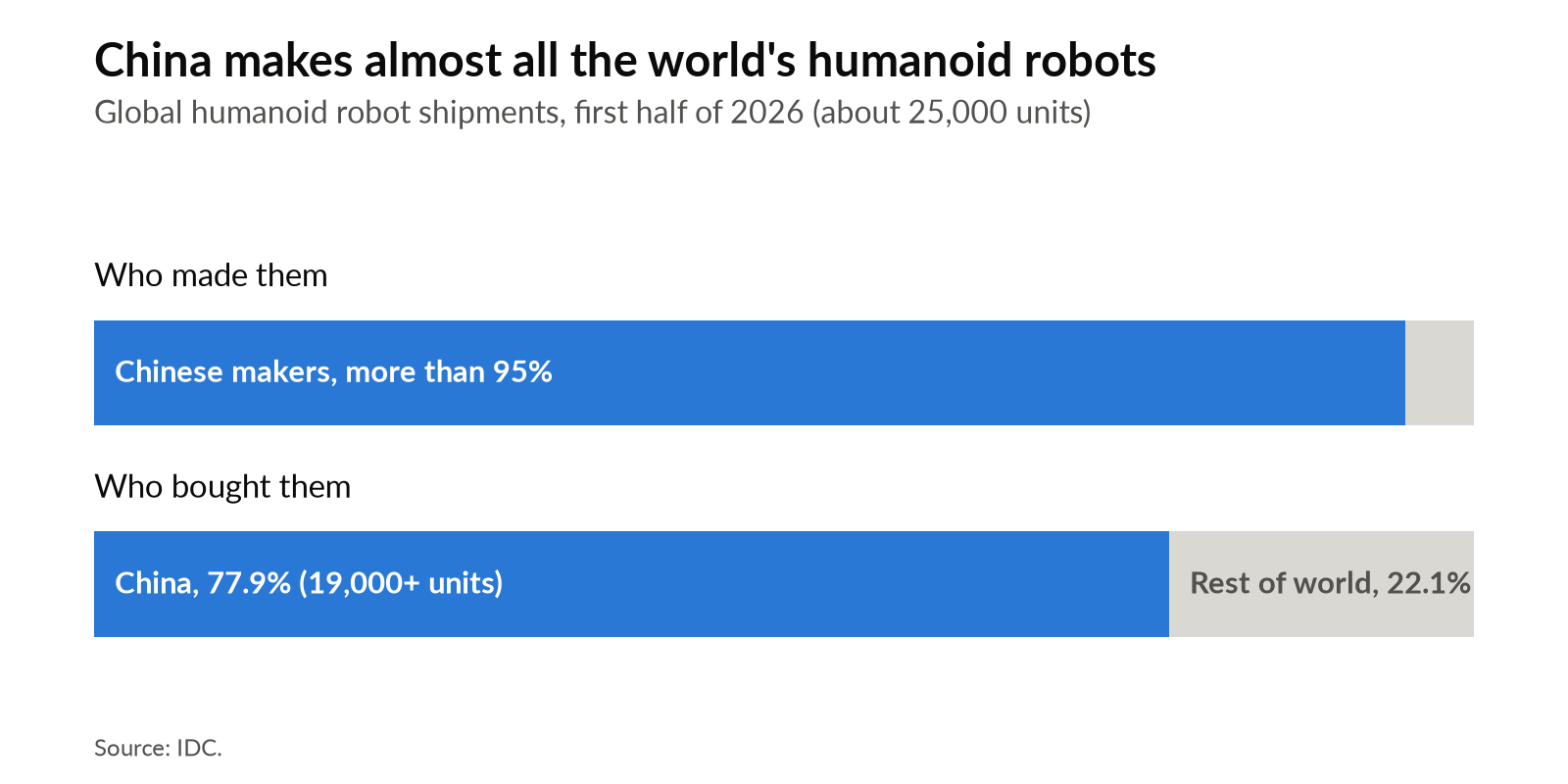
China’s humanoid robot industry has moved from proving the technology to mass production. Global shipments approached 25,000 units in the first half of 2026, up 432.1% year-on-year, according to IDC. Chinese makers built more than 95% of them, and China itself bought more than 19,000, or 77.9% of the total. IDC raised its 2030 forecast by about 50% to more than 750,000 units. China’s edge comes from its manufacturing base, a near-complete component supply chain and its ability to cut costs quickly as volumes rise.
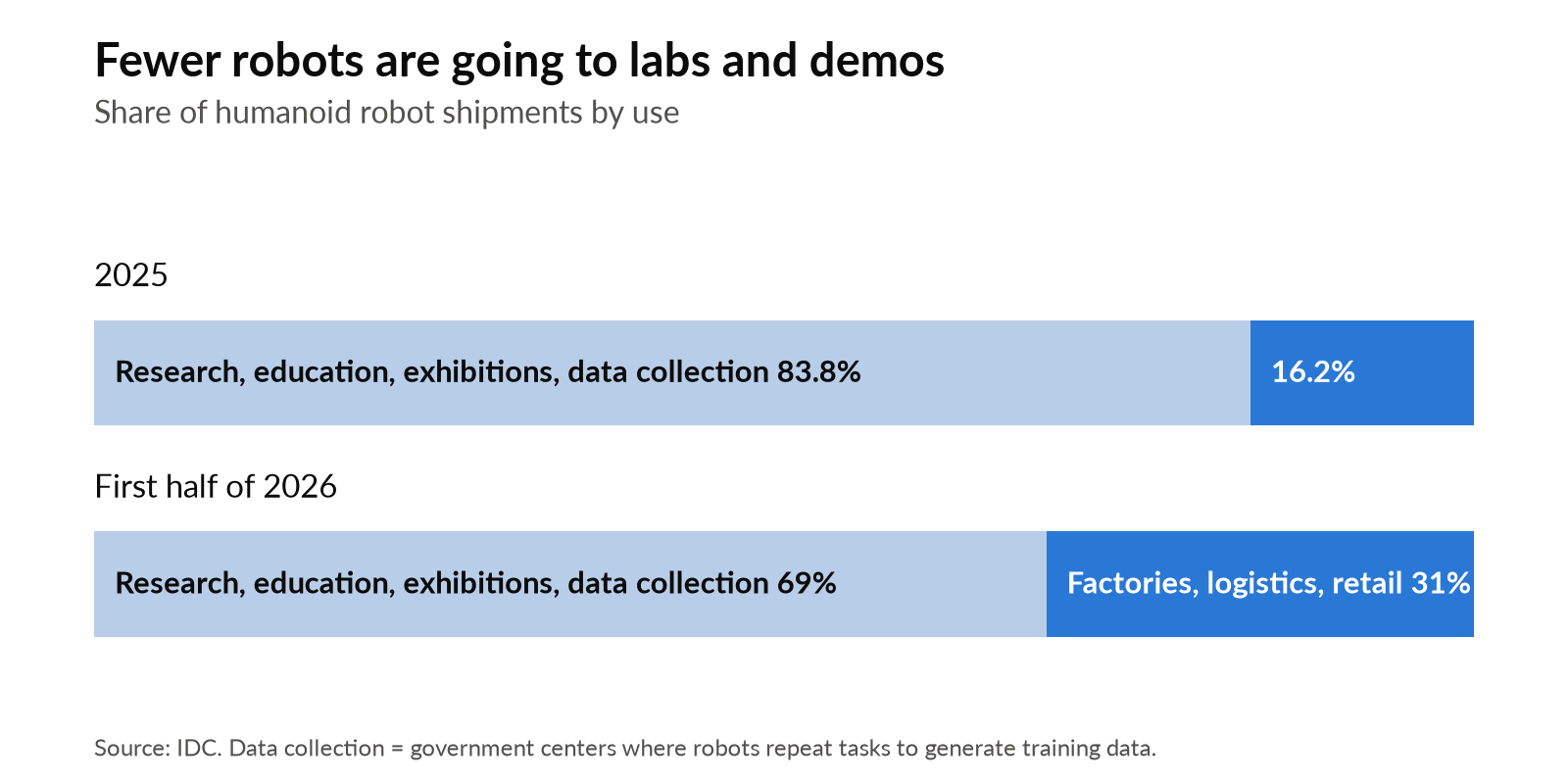
More importantly, the buyers are changing. Research, education, exhibitions and government data-collection centers, where robots repeat tasks to generate training data, took 69% of shipments in the first half, down from 83.8% in 2025. The rest went into manufacturing, logistics, retail and other services. Factories are the clearest commercial opportunity. Car and electronics plants are structured environments where robots can move materials, load, sort and inspect. So the number to watch next is repeat orders and larger fleet deployments, not headline shipment growth.
Competition among the makers is heating up. Agibot shipped more than 8,600 units in the first half, about 35% of the global total, and overtook Unitree as the largest maker. Unitree shipped around 5,900 by research firm SAG’s count. Unitree listed on Shanghai’s STAR Market on 19 August (688836.SH), but most overseas retail investors can’t buy STAR shares directly, and Agibot is still private ahead of a planned Hong Kong IPO. That leaves UBTECH (9880.HK) as the clearest humanoid maker most of our readers can buy, with its Walker robots working in car plants and other factories. The risk is that more Chinese makers chasing the same orders will push down robot prices and hardware margins.
A broader listed opportunity may lie with the component suppliers. Every humanoid needs actuators (the motorized joints that move it), motors, reducers, bearings, sensors and motion-control systems. Component demand could rise sharply as production goes from tens of thousands of units toward hundreds of thousands. Listed suppliers include Tuopu Group (601689.SH) and Sanhua Intelligent Controls (002050.SZ, also 2050.HK) in actuators and electromechanical parts, Leader Harmonious Drive (688017.SH) in harmonic reducers, the compact gearboxes inside robot joints, and Inovance Technology (300124.SZ) in servo motors and industrial automation. These suppliers can grow with the whole industry instead of betting on one robot maker.
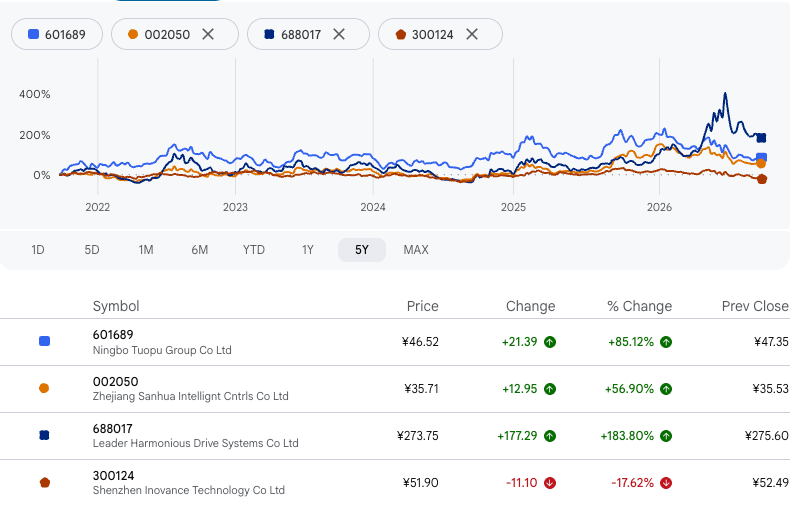
China has entered the first stage of humanoid commercialization, which is mass production. Mass deployment comes next, and general-purpose adoption after that. The question is no longer whether China can make humanoid robots cheaply. It is whether they can do useful work reliably enough to pay back the customer. Falling component costs, better embodied-AI models (the AI that controls a robot’s body) and more real-world deployment data should feed each other, with factories driving near-term growth. We think the suppliers are the better way to own this than the robot makers. Robot prices will likely fall as more makers compete, but every robot shipped, whoever builds it, still needs joints, gearboxes and motors.
